
Repeated ants near wood
Record where and when ants appear, including windows, doors and areas near damp wood. Large ants are not automatically carpenter ants; identification comes before attributing damage.
PESTCALLNOW | CARPENTER ANT CONTROL
Seeing large ants repeatedly near wood, windows, or damp areas? PestCallNow provides carpenter ant control services. Call to discuss what you are seeing and the inspection and treatment needs for your property.
Record where ants travel, any suspected wood debris and nearby moisture concerns. Size alone does not identify carpenter ants. Ask how identification and possible nest locations will guide the proposed work.
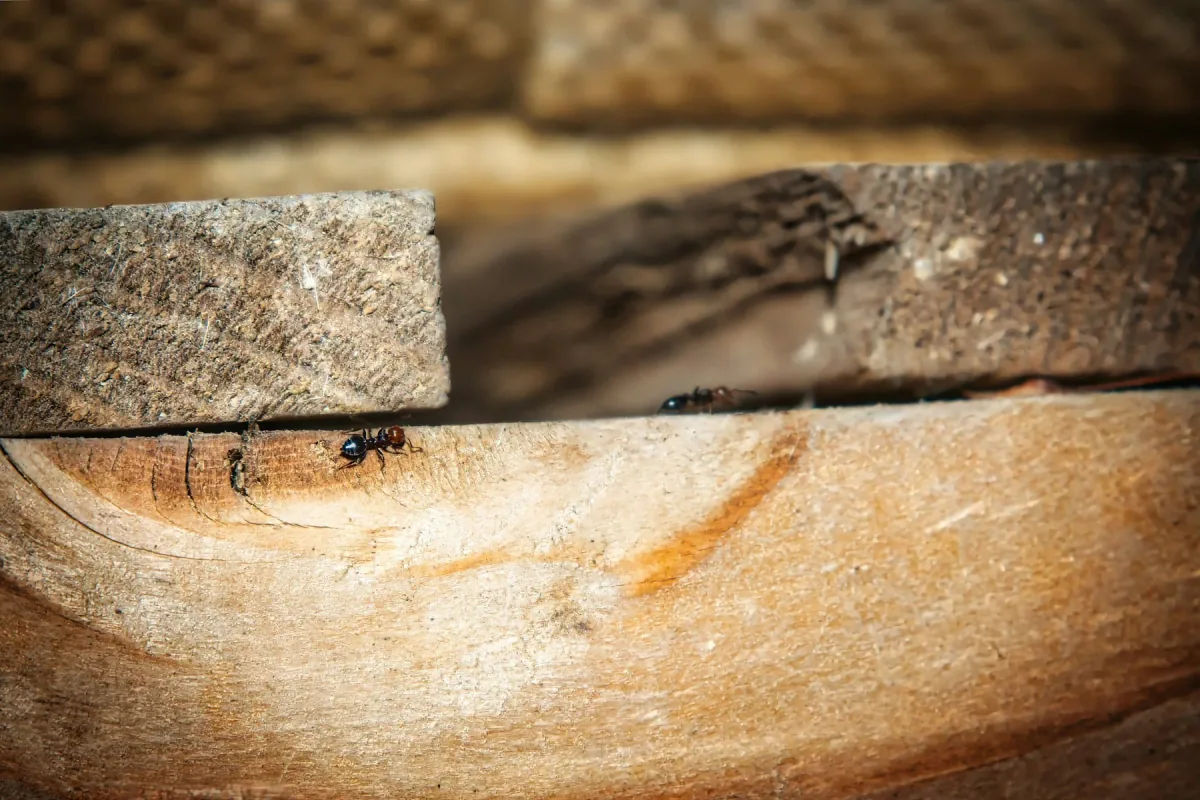
WHAT YOU MAY NOTICE
Recurring ants near wood or moisture deserve a closer look, but no single clue establishes a nest or its extent. Keep photos and location notes without opening walls or probing structural materials.
Record where and when ants appear, including windows, doors and areas near damp wood. Large ants are not automatically carpenter ants; identification comes before attributing damage.
Carpenter ant nesting can produce coarse sawdust-like shavings and other debris. Photograph the material and its location. Debris alone does not establish the cause or confirm an active nest.
Mention leaks, damp wood or earlier repairs. Such conditions may help an assessment, but apparently dry surfaces do not exclude nesting elsewhere or galleries extending into sound wood.
IDENTIFICATION COMES FIRST
Carpenter ants excavate wood for nesting rather than eating it. Workers may forage away from a nest, so indoor sightings do not by themselves establish that the colony is inside the building.
Activity indoors can come from nests in the structure or surrounding property. Ask how accessible areas and travel patterns will be considered rather than assuming the visible workers mark the nest.
A colony may involve more than one nest location. Discuss how suspected nesting and continuing activity will be evaluated, without assuming that removing a few visible workers resolves the source.
Carpenter ants and termites require different assessments. If the insect or wood evidence is uncertain, ask for identification before selecting a treatment.
THE PROFESSIONAL TREATMENT APPROACH
The service conversation should address identification, possible nesting locations and the property conditions involved. Ask what can be assessed safely and what remains uncertain before agreeing to work.
Provide your address, affected locations, photos if available, moisture concerns and previous treatment details. Ask which indoor and outdoor areas are included in the assessment.
Ask how findings will guide the proposed treatment and whether further access or assessment may be needed. No specific product, fixed visit schedule or guaranteed elimination is promised.
Confirm access, any preparation and actual instructions for occupants and pets. Ask how to record recurring activity and when to report it so follow-up considers more than the visible workers.
Moisture correction and damaged-wood repairs may require separate work. Confirm responsibilities and costs; pest control does not automatically include structural assessment or repairs.
GOOD HABITS BETWEEN VISITS
Moisture and wood conditions matter alongside the insects. Practical maintenance supports the plan, but it does not replace identification or establish that a suspected nest is gone.
Arrange appropriate repairs for water problems and note affected areas for the assessor. Carpenter ants often use compromised wood, but galleries may extend into sound wood.
Mention stored firewood, stumps or wood touching the building when safely observable. Ask whether nearby conditions are relevant without assuming every outdoor nest requires treatment.
Track dates and locations of continuing ants or new debris. Follow the actual treatment instructions and contact the treating professional before adding products that could complicate the plan.
BEFORE YOU BOOK
Understand the service conversation before deciding what comes next.
No. Carpenter ants excavate wood to create nesting galleries rather than eating it. This activity can damage wood, but an assessment is needed to identify the insect and evaluate the concern.
No. Foraging workers can come from nests inside the building or on the surrounding property. Record where activity recurs and ask how possible nest locations will be assessed.
Nesting debris can include coarse sawdust-like shavings and other material. Photograph it and note where it appeared. Similar debris can have other causes, so appearance alone is not a diagnosis.
They often begin in moisture-compromised wood, but galleries can extend into sound wood. A dry-looking surface does not rule out a concealed concern or establish the condition of surrounding materials.
Moisture-compromised wood can support nesting. Share known water problems and arrange appropriate repairs. Moisture correction supports management, but does not by itself confirm that ants or nests are gone.
Workers may forage away from their nest, and a colony may include parent and satellite nests. Discuss how the source and continuing activity will be evaluated rather than relying only on visible worker removal.
YOUR NEXT STEP
Call PestCallNow with your address, the areas affected and any previous treatment details. Confirm the assessment scope, preparation and service availability before booking.