
Suspected activity
Report possible tubes, swarmers or changed wood conditions and where they occur. Similar-looking evidence can have other causes. Avoid probing structural materials yourself to establish a diagnosis.
PESTCALLNOW / TERMITE CONTROL
Call PestCallNow about suspected termite activity and confirm service at your address. Identification, the property and the areas affected should guide a treatment conversation. A photograph or damaged piece of wood alone does not establish the scope.
Note where you saw insects or possible activity and keep available inspection or treatment records. Ask about assessment, method suitability, preparation and follow-up before agreeing to a termite control plan.
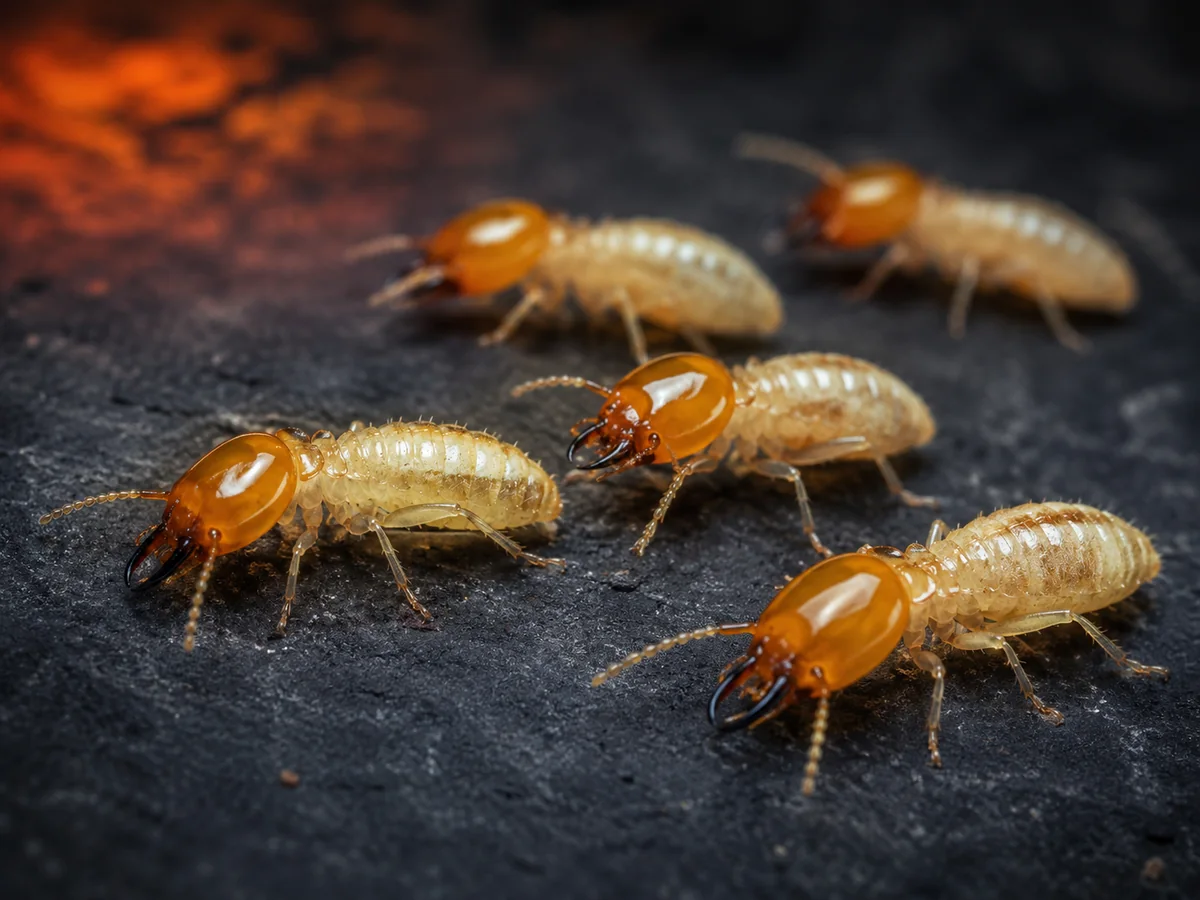
WHAT YOU MAY NOTICE
Explain what you have observed, where it occurs and what you have already done. These details help clarify an assessment; they do not establish a diagnosis on their own.
Report possible tubes, swarmers or changed wood conditions and where they occur. Similar-looking evidence can have other causes. Avoid probing structural materials yourself to establish a diagnosis.
Winged ants and termite swarmers can be confused. Ants generally have bent antennae and front wings longer than the rear pair; termite swarmers have straighter antennae and similarly sized wings. Use these as clues, not proof of the infestation type or location. Keep a photo if practical and ask for identification.
Explain leaks, access difficulties and prior inspections or treatments. Outdoor termites alone do not prove that the home is infested. The relationship between observed activity and the structure requires assessment.
IDENTIFICATION COMES FIRST
The findings and your property matter. Clarify what can be assessed and which questions remain before agreeing to a service plan.
Ask whether the findings indicate a subterranean termite concern and how property conditions affect the recommendation. Do not select a treatment merely from a broad national species list.
If drywood termites are suspected, ask how identification and affected areas will be established. Different termite concerns can need different approaches; no particular method or geographic presence is promised here.
A broad description or photograph cannot establish what is present at your address. Discuss identification, access and limitations for your home.
THE PROFESSIONAL TREATMENT APPROACH
Confirm service at your address, the assessment scope and what the recommendation will be based on. Ask about costs, preparation and review arrangements before agreeing.
Discuss identification, accessible activity and affected areas before selecting treatment. An inspection identifies questions and limitations; it is different from carrying out the recommended control work.
Different approaches address different termite concerns. The recommendation should explain which areas and activity it targets, what monitoring is needed and what work is included. A product that kills insects on contact does not by itself establish structural protection.
Clarify included areas, access or preparation requirements and instructions for people and pets. Any product must be used according to its label. Re-entry is method-specific, not a universal drying period.
Ask what the price covers, any exclusions, monitoring or reassessment arrangements and additional charges. Duration depends on the findings and plan. Do not assume a spot treatment is sufficient for every situation.
Follow appointment-specific instructions and applicable product labels. Ask for clarification whenever access, preparation, precautions or the scope is unclear.
GOOD HABITS BETWEEN VISITS
Practical conditions and clear records can support the service conversation. They do not replace assessment, guarantee results or establish a universal service schedule.
Report recurring leaks or damp conditions and arrange appropriate repairs. Prevention supports a plan but does not establish that a hidden termite population is gone.
Ask about suitable maintenance around the structure and any inaccessible areas. Do not disturb structural materials or replace a professional assessment with a visual guess.
Keep inspection findings, treatment records and monitoring instructions. Report changes using the agreed plan and clarify any warranty terms rather than assuming they apply.
BEFORE YOU BOOK
Understand the service conversation before deciding what comes next.
Ants generally have bent antennae and unequal wing pairs; termite swarmers have straighter antennae and similarly sized wings. These features are clues, not a complete diagnosis. Share a clear photo and where it was found, and ask whether the findings concern the structure.
Not necessarily. Outdoor activity does not by itself establish infestation of the home. Explain the location and other signs so the relationship to the structure and the need for assessment can be discussed.
The right approach depends on termite identification, the areas affected and property conditions. Treatment should address the assessed activity rather than only the insects you can see. Confirm the recommended scope and precautions before booking.
No single scope suits every termite concern. Ask how the affected areas and possible wider activity were assessed before agreeing to a limited treatment. Killing visible insects does not establish complete structural protection.
Treatment and subsequent monitoring can have different timeframes. Ask about expected review points and when to report new activity. There is no universal duration or guaranteed result for every property.
Inspection concerns assessment, accessible areas and findings; treatment concerns the work proposed in response. Clarify the inspection scope and any separate treatment quote before booking, especially if you need a transaction-related report.
Further reading:
EPA: Termite identification and controlUniversity of Kentucky: Termite assessment questionsYOUR NEXT STEP
Share your address or ZIP, what you have noticed and any previous records. Confirm service availability, the proposed scope and fees before booking.