
A visible nest or repeated traffic
Tell us where the nest or recurring flight activity is located, including nearby doors, walkways or play areas. Describe what is safely observable without climbing or getting close to the entrance.
PESTCALLNOW | WASP AND HORNET REMOVAL
Repeated wasp activity or a suspected nest near your home? PestCallNow provides wasp and hornet removal services. Call to discuss the location, assessment, safe access and what treatment or physical removal may involve.
Keep people and pets away from the suspected nest. Describe the activity from a distance rather than approaching to identify the insects. Confirm the work included before booking; treating a colony and removing its nest are separate questions.
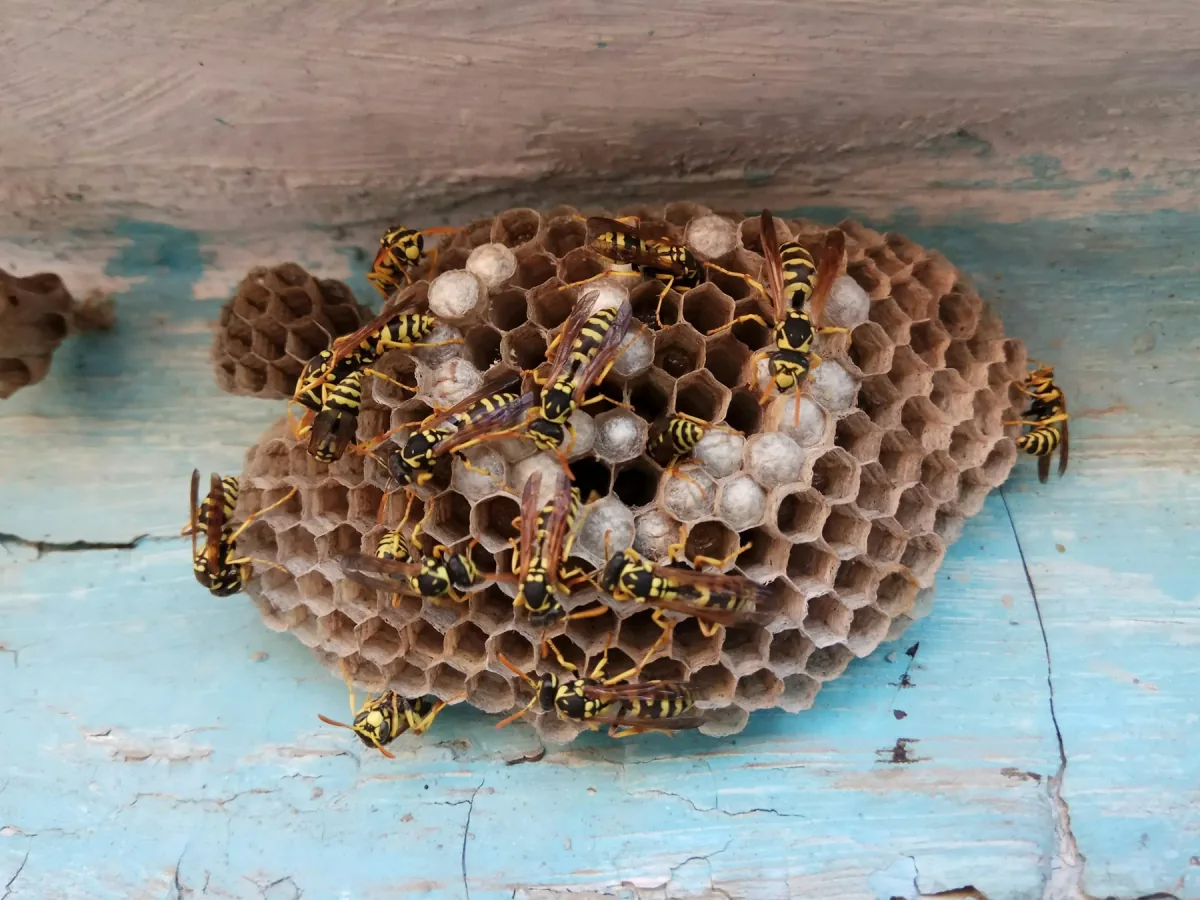
WHAT YOU MAY NOTICE
The location and pattern of activity help frame a service enquiry. Do not disturb a nest to obtain a photograph, identify an insect or test whether it is active.
Tell us where the nest or recurring flight activity is located, including nearby doors, walkways or play areas. Describe what is safely observable without climbing or getting close to the entrance.
Wasps, hornets and bees need appropriate identification. A yellow-and-black insect or a single indoor visitor does not establish a colony. Share a photo only if it can be taken without approaching.
Concentrated traffic at an opening may indicate concealed nesting, but its cause needs assessment. Keep away and do not seal, probe or alter an active entrance before receiving appropriate guidance.
IDENTIFICATION COMES FIRST
A visible nest is not the only possible nesting situation. Explain the location and access constraints so the proposed work can account for the property and nearby occupants.
Mention a visible nest on a safely observable exterior surface, along with height and nearby activity areas. Ask how safe access and any physical removal will be handled; do not use a ladder to inspect it yourself.
Describe traffic near soil openings, wall cavities or roof spaces from a distance. These concerns can require different assessment and access decisions from an exposed nest. Building access or repairs are not automatically included.
Identification comes before choosing a treatment. If honey bees may be involved, ask about an appropriate identification or bee-specific referral rather than assuming wasp removal applies.
THE PROFESSIONAL TREATMENT APPROACH
Ask how the findings will guide the service. Treatment of activity, physical nest removal and work on the surrounding structure are different tasks and should be discussed separately.
Give your address, observed activity, nest location if known and any difficult access or nearby occupied areas. Do not approach an active nest to supply missing details.
Ask what assessment and treatment cover, whether physical removal is included and how access affects the quote. Confirm assessment charges, attendance arrangements and the proposed method before agreeing to the work.
Ask where people and pets should remain, what preparation is needed and how to report continuing activity. Follow the actual service instructions instead of assuming a universal safe-return time.
Do not burn, flood, strike or seal an active nest. Keep your distance and discuss the findings, access and follow-up with the service professional.
GOOD HABITS BETWEEN VISITS
Useful preparation begins with keeping activity areas clear of people and pets. Wait for service-specific instructions before moving objects, cutting vegetation or attempting access near a suspected nest.
Avoid the suspected nest and choose another route around the area where possible. Keep children and pets away. Do not move or disturb the nest to make it easier to reach.
Mention gates, pets, high locations or concealed areas when arranging service. Confirm any access work and who is responsible for it; repairs or opening walls are not assumed to be part of removal.
After a completed service, note where activity continues from a safe distance and contact the treating professional. Ask what the findings mean for follow-up rather than relying on a fixed waiting period.
BEFORE YOU BOOK
Understand the service conversation before deciding what comes next.
Not necessarily. A single visitor does not establish a colony inside the building. Note where it appeared and whether sightings recur without approaching or opening a suspected nesting area.
Do not seal or disturb an active entrance before assessment. Concealed nesting and the movement of insects require appropriate guidance. Keep people and pets away and describe the location from a distance.
Confirm this before booking. Treating the colony and physically removing a nest are different tasks. Access, location and work on surrounding materials can change what is practical and what is included.
Identification, nest location, height, access, treatment scope and any physical removal or follow-up can affect the quote. Ask for the proposed work and charges rather than assuming a universal price.
Ask about identification before selecting a service. Honey-bee concerns may need a different approach or an appropriate referral. Identification should establish which service is suitable before any treatment is discussed.
Observe from a safe distance, record the location and contact the treating professional. Follow-up depends on the findings and actual service plan; do not disturb the nest or add products based on a fixed waiting rule.
Further reading:
University of Minnesota Extension: wasps and beesUniversity of Maryland Extension: social waspsYOUR NEXT STEP
Call PestCallNow with your address, activity locations and previous treatment details. Confirm assessment, preparation, costs and any follow-up before booking.